Before we go a single step further, let me be clear about what this article is and isn't. I'm a home cook, not a dietitian or a doctor. What follows is general, practical, real-life thinking about eating well — the kind of common-sense stuff that's helped me feed myself and my family over the years. It is not nutrition, dietary, or medical advice. If you have specific health goals, food allergies, a medical condition, or any particular dietary needs, please talk to a doctor or a registered dietitian. They can give you guidance that fits you, which no article ever can.
With that said — eating well doesn't have to be complicated, joyless, or expensive. So much of the advice out there makes it sound like a full-time job. It isn't. It's mostly a handful of gentle habits, repeated often enough to stick. Here's how I think about it.
Habits beat diets#
The big lesson I keep relearning: strict diets are easy to start and hard to keep. The dramatic overhaul — cut this entire category, follow these rigid rules, never again touch that — tends to last a few intense weeks before real life shows up and it all collapses. And then comes the guilt, which helps no one.
Small habits are different. They're so easy you barely notice them, and that's exactly why they last. Adding a vegetable to a meal you already make. Drinking a glass of water out of habit. Cooking at home one more night a week than you used to. None of these is dramatic. All of them, repeated over months, quietly add up to a way of eating you can actually live with.
Eating well isn't about being perfect for a month. It's about being pretty good, most of the time, for years.
So if you take one idea from this whole article, let it be this: choose habits small enough that you'll genuinely keep doing them. A change you maintain beats a change you abandon, every single time.
Cooking at home gives you the wheel#
I'm biased — I love to cook — but there's a simple, practical truth here that goes beyond preference. When you cook your own food, you decide what goes in it. You control the ingredients, the portions, and the balance in a way you simply can't when someone else is doing the cooking.
This doesn't mean every meal has to be elaborate or made entirely from scratch. A quick stir-fry, a sheet-pan dinner, a pot of soup, eggs and toast — these are all home cooking, and all perfectly good. The point isn't fanciness; it's that you're in charge of what's on the plate.
If cooking more often feels daunting, lean on the everyday systems that make it doable: plan a few meals for the week so you're not deciding while exhausted, keep a stocked pantry so you can always make something, and batch-cook components on a quiet afternoon so weeknights are half-done before they start. Eating well and cooking sustainably are really the same project wearing two hats.
More plants, more variety, less subtraction#
Here's a reframe that takes the pressure off. Instead of obsessing over what to cut out, think about what to add in. It's a kinder, more sustainable way to eat, and honestly a more delicious one.
The most common general guidance you'll hear — and it's about as uncontroversial as food advice gets — is to eat more plants. More vegetables, more fruit, more beans and lentils, more whole grains. You don't have to give up anything you love to do this. You just nudge the proportions: a little more of the plants, a little more color and variety on the plate.
A few easy, low-stakes ways to add rather than restrict:
- Toss an extra handful of vegetables into whatever you're already cooking
- Make half your plate vegetables when it's easy to do so
- Try beans or lentils in place of meat once in a while
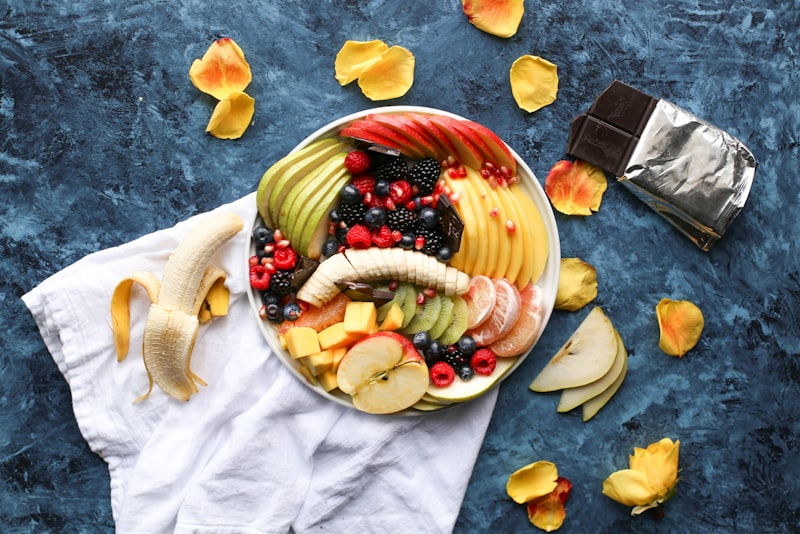
- Keep fruit washed and visible so it's the easy grab
Variety helps too. Eating a wide range of different foods, rather than the same three things on repeat, keeps meals interesting and keeps you from getting bored and bailing on the whole effort. (Again — general lifestyle thinking, not a nutrition prescription.)
A gentle sense of portions#
Portion sizes have crept up over the years, and a loose, no-stress awareness of how much you're eating can help — no scales, no calorie math, no joyless tracking required.
A simple mental picture a lot of people find useful: roughly half the plate vegetables or fruit, a quarter some kind of protein, a quarter grains or starch. It's a rough guide, not a ruler. Some meals won't fit it and that's completely fine. It's just a loose default to drift toward, not a rule to enforce.
The other quiet skill is slowing down. Eating fast makes it easy to sail past "satisfied" without noticing. Sitting down, putting the fork down between bites, paying a little attention — these small things help you feel when you've had enough. Like everything here, it's a soft habit, not a hard rule.
Balance, not all-or-nothing#
The most important thing I can leave you with: ditch the all-or-nothing mindset. One "off" meal doesn't undo anything, and there are no forbidden foods in a balanced life. The cake at the birthday party, the fries you love, the comfort food on a hard day — these belong in a real, joyful, sustainable way of eating. Food is one of life's great pleasures, not a test you pass or fail.
Aim for mostly nourishing, mostly home-cooked, with plenty of room for the foods that simply make you happy. That balance is what makes good eating something you can keep up for the long haul instead of a sprint you burn out of.
Start with one small thing this week — one extra vegetable, one more home-cooked night, one slower meal. Let it become automatic. Then, when you're ready, add the next. That's the whole simple secret: small, kind, repeatable. And once more, because it matters — for anything specific to your health or body, talk to a professional who can advise you properly.