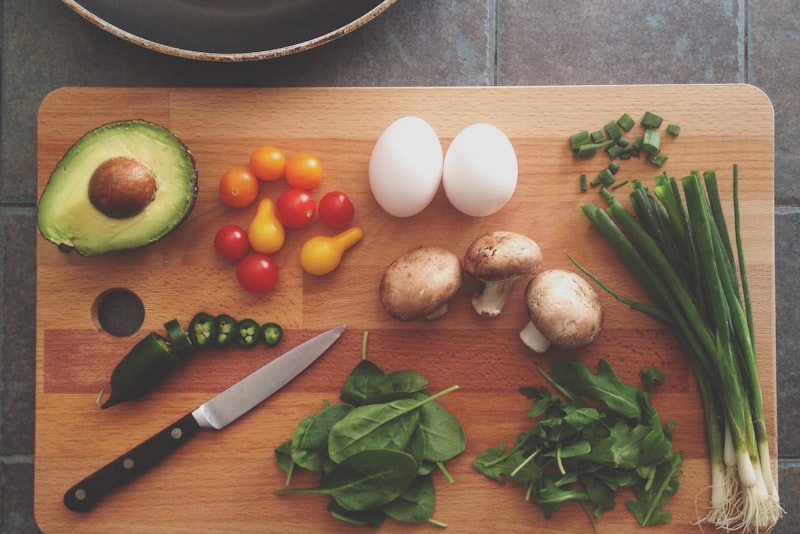
I've watched cooks in professional kitchens move through a mountain of onions in the time it takes most people to find the cutting board. It looks like magic. It isn't. It's a few simple movements done thousands of times until they become second nature. And here's the good news: you don't need a culinary degree or a knife block that costs more than your rent to get most of the benefit.
You need one decent knife, a habit or two, and the willingness to slow down for a week so you can speed up forever. Knife skills are the first thing I teach anyone who wants cooking to feel less like a chore. Get comfortable here, and everything downstream — the chopping, the prepping, the actual dinner — gets faster and a lot more pleasant.
A Sharp Knife Is a Safe Knife#
This sounds backwards, so let me say it plainly: the dull knife in your drawer is the dangerous one. A dull blade doesn't bite into food cleanly. It skids across the skin of a tomato or rolls off an onion, and the moment it slips is the moment it finds your finger instead. A sharp knife sinks in where you place it and stays put.
Keeping an edge isn't complicated. A honing steel — the long rod that came with your knife set — realigns the edge and takes ten seconds before you cook. Run the blade down it at a shallow angle a few times per side. That's maintenance, not sharpening.
Actual sharpening, where you remove a little metal to create a fresh edge, happens less often — every month or two for a home cook, depending on use. You can use a whetstone if you enjoy the ritual, or take your knives to a hardware store or sharpening service. Either way, test it the same: a sharp knife glides through a sheet of paper or the skin of a ripe tomato without sawing.
The Grip That Changes Everything#
Most people hold a knife like a hammer, fist wrapped around the handle. That gives you power but no control, and control is what you actually want.
Instead, pinch the blade. Grip the handle with your last three fingers, then slide your thumb and the side of your index finger up to pinch the base of the blade itself, just past the handle. It feels strange for about a day and then feels like the only sensible way to hold a knife. Your hand becomes part of the blade, and your cuts get cleaner instantly.
Now the other hand — the one holding the food. This is where I see the most nervous chopping, and it's the easiest fix in cooking.
The Claw#
Curl your fingertips under so your knuckles face the blade. Your fingers form a claw, and the flat front of your knuckles becomes a guide for the side of the knife. The blade rides against your knuckles, your fingertips tuck safely behind them, and you simply walk that claw backward as you cut.
The claw isn't about cutting carefully — it's about cutting confidently. When your fingertips are out of the blade's path, you stop flinching, and the work gets faster on its own.
Practice it slowly on something forgiving, like a stick of celery or a peeled carrot. Within a few sessions your hands will do it without being told.
The Four Cuts You Actually Need#
Recipes throw around fancy French terms, but for home cooking you can ignore almost all of them. Master these four and you're set.
- Slice: straight cuts to make rounds or planks — think cucumber, mushrooms, a tomato for a sandwich.
- Chop: rough, roughly-even pieces where precision doesn't matter, like vegetables headed for a stockpot.
- Dice: chopping with intention. Cut into planks, stack the planks and cut into sticks, then cut across the sticks into cubes. Big cubes are a large dice; small ones, a fine dice.
- Mince: the tiny stuff — garlic, ginger, herbs. Get it small with rough cuts, then rock the blade over the pile, pivoting on the tip, until it's fine.
The motion behind all of them is a gentle rock. Keep the tip of the knife near the board and push the blade forward and down through the food, then draw it back. You're slicing, not chopping like an axe. Let the sharp edge and the weight of the blade do the work while your guiding hand walks the food into position.
A Quick Word on the Onion#
The onion intimidates people, but it has a built-in cutting guide. Slice it in half through the root, peel it, and leave that root end intact — it holds the layers together. Make a few horizontal cuts toward the root, then vertical cuts down through the top, then slice across. Even, fast dice, every time. The root is the handle; toss it last.
Build the Habit, Then Forget About It#
Here's the part nobody tells you: knife skills feel like work for exactly one week. You'll be slow. You'll glance at your claw to make sure your fingers are tucked. Then somewhere around day five, your hands stop asking permission and just go. That's the whole game.
A few practical notes while you build the habit. Always cut on a stable surface — if your board slides, set a damp paper towel or a thin kitchen cloth underneath it to lock it down. Keep your knife sharp, keep your claw curled, and never try to catch a falling knife. Step back and let it land. Wash and dry blades by hand rather than tossing them in the dishwasher, where they bang around, dull, and rust.
And the broader food-safety basics still apply at the board: wash your hands and your cutting surface before you start, and keep raw meat, poultry, and seafood on a separate board from anything you'll eat raw, so juices never cross over. If you're cooking proteins, a food thermometer takes the guesswork out of doneness — but that's the next meal's concern. Today, just cut.
Spend one week with these few movements and you'll wonder how you ever cooked without them. The knife stops being a thing you fight and becomes the most useful tool you own. That's where good cooking starts — calm hands, a sharp edge, and the quiet confidence that you know exactly what you're doing.